_Common_Mistakes_People_Make_When_Moving_to_Greenville_SC.png)
Moving to Greenville SC can be an exciting opportunity. The Upstate offers a mix of city living, suburban communities, outdoor recreation, growing employment opportunities, and a wide range of housing options.
But moving to Greenville is not as simple as picking a house from an online listing and scheduling the moving truck.
One of the biggest challenges for people relocating to Greenville is understanding how different parts of the area can feel from one another. A home that looks perfect online may not be the best fit once you consider your commute, neighborhood, schools, daily errands, future development, and lifestyle.
Whether you're moving to Greenville from another state, another part of South Carolina, or somewhere else in the Upstate, knowing the common mistakes people make when moving to Greenville SC can help you make a more informed decision.
Here are some of the biggest mistakes to avoid before you make your move.
1. Assuming All of Greenville Is the Same
One of the first mistakes people make when moving to Greenville SC is treating the entire area as one market.
Greenville is much more than downtown Greenville.
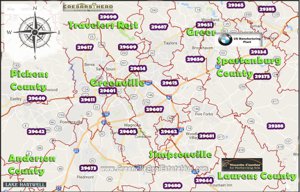
The broader Greater Greenville area includes a variety of communities, suburbs, municipalities, and unincorporated areas. Depending on where you live, your experience can be very different in terms of commute, housing styles, lot sizes, amenities, schools, shopping, restaurants, and access to major roads.
For example, someone who wants a walkable lifestyle close to downtown may have very different priorities from a buyer looking for a larger lot, newer construction, or more space in a suburban community.
Popular areas around Greater Greenville can include Greenville, Greer, Simpsonville, Mauldin, Travelers Rest, Taylors, Easley, Fountain Inn, Powdersville, and other surrounding communities.
The right choice depends on what you want your everyday life to look like.
Instead of asking, "What is the best area in Greenville?" a better question is:
"Which area of Greater Greenville best fits my lifestyle, budget, commute, and long-term plans?"
That distinction can save you a lot of time and frustration.
2. Choosing a Home Before Understanding the Neighborhood
.jpg) Another common mistake is falling in love with a house before researching the area around it.
Another common mistake is falling in love with a house before researching the area around it.
A beautiful kitchen, large backyard, new flooring, or impressive primary suite can make a home feel like the obvious choice. But you aren't just buying the house.
You're also choosing a location — and a house can be renovated far more easily than a neighborhood can be changed.
Before making an offer, consider:
- How long will your commute actually take?
- What roads will you use every day?
- Are grocery stores and other essentials nearby?
- What is the neighborhood like during weekdays and weekends?
- Are there HOA restrictions?
- Are there planned developments nearby?
- How does the neighborhood fit your lifestyle?
- What schools serve the address?
- What might the area look like several years from now?
Greenville County maintains community, area, and corridor plans that can provide useful information about land use and future planning. For example, the county has adopted plans covering areas including Five Forks, Piedmont, Taylors, South Greenville, and other parts of the county.
That doesn't mean every planned project will happen exactly as proposed. It does mean that buyers should look beyond the current view from the front porch.
Beyond the immediate purchase, think about what you want long-term. Do you want a larger yard? More established trees? Walking or biking access? Nearby parks? A particular school assignment? A neighborhood with amenities? Less driving for everyday errands?
There is no universally "best" Greenville neighborhood. There is only the neighborhood that best fits your priorities.
If you're still figuring out what to look for, our guide on how to choose the right neighborhood when buying a home can help you evaluate the location beyond the house itself.
3. Underestimating Your Commute
.jpg) This is one of the most important mistakes to avoid when relocating to Greenville SC.
This is one of the most important mistakes to avoid when relocating to Greenville SC.
A neighborhood may look close to your workplace on a map, but distance doesn't always tell the whole story.
The Greenville area continues to grow. Recent Census Bureau estimates put the city's population in the mid-70,000s, up significantly from just over 60,000 in 2010 — and the broader Greater Greenville area is growing even faster as new residents settle in surrounding communities.
As more people live, work, and travel throughout the region, the time it takes to get from one part of the Upstate to another can become an important part of your daily routine.
That's why you shouldn't evaluate a commute based solely on a weekend drive.
If you're relocating for work, try to understand what your drive could look like during your normal work schedule.
Think about:
- Where will you work?
- What time will you leave home?
- What time will you return?
- How often will you travel to downtown Greenville or other parts of the Upstate?
- Will you need convenient access to I-85, I-385, I-26, or other major routes?
A home that saves you $20,000 may not feel like a bargain if it adds significant time to your daily commute.
4. Only Visiting on the Weekend
If you're relocating from out of state, you may only have a day or two to explore Greenville before deciding where you want to live.
That creates another potential mistake: judging an area based entirely on a weekend visit.
A neighborhood can feel completely different on a Saturday afternoon than it does on a weekday morning.
If possible, visit neighborhoods at different times of day.
Drive through during a weekday morning. Visit again in the afternoon. Look around on a weekend.
Pay attention to traffic, noise, parking, nearby businesses, school traffic, construction activity, and how easy it feels to get where you need to go.
If you can't visit multiple times because you're relocating from a distance, this is where working with someone who understands the local area can be particularly helpful.
5. Not Researching School Assignments Carefully
Families moving to Greenville often make the mistake of looking at a home's location and assuming they already know which school their children will attend.
School assignments can be address-specific, so it's important to verify the current assignment for the property you're considering.
Greenville County Schools provides an official Find Your School tool that allows families to search school assignments by address or subdivision.
Greenville County Schools is also a large and diverse district, serving tens of thousands of students and offering traditional schools as well as specialized programs, career and technology opportunities, magnet programs, and other educational options.
If schools are an important factor in your move, don't simply rely on a real estate listing description or an online map. Research the actual address.
And remember that school considerations can be more complicated than simply looking at a rating. Families may also want to consider programs, transportation, extracurricular activities, school choice options, and the overall fit for their children.
For more information, our Greenville County school district guide goes into more detail.
6. Assuming New Construction Is Always the Better Choice
.jpg) New construction is one of the reasons many people are attracted to the Greenville area.
New construction is one of the reasons many people are attracted to the Greenville area.
New homes can offer modern floor plans, energy-efficient features, updated finishes, warranties, and community amenities. But new construction isn't automatically the right choice for every buyer.
A newer home farther from your preferred location may not make sense if your priority is a shorter commute.
You also need to consider lot sizes, HOA fees, neighborhood density, construction timelines, included features, upgrades, builder incentives, and the surrounding area's development.
On the other hand, an older resale home may offer a more established neighborhood, mature landscaping, larger lots, or a location closer to existing amenities.
The right answer depends on your priorities.
If you're comparing the two, our guide to new construction vs. resale homes in Greenville SC can help you understand the trade-offs.
7. Waiting Too Long to Get Pre-Approved
Another mistake relocating buyers make is starting the home search before understanding their financing options.
It's easy to browse listings online and develop an idea of what you want to spend. But your online search range isn't necessarily the same as your comfortable monthly budget.
Getting pre-approved early can help you understand your purchasing power and make your search more focused. It can also help you move quickly when you find the right property.
This is particularly important if you're relocating from another state and don't have an established local real estate network yet.
Before touring dozens of homes, talk with a qualified lender about your financing options, monthly payment expectations, cash requirements, and potential closing costs.
And don't confuse pre-qualification with pre-approval. They can serve different purposes during the home-buying process.
8. Looking Only at the Purchase Price
A home priced at $400,000 doesn't necessarily cost $400,000 to own. One of the most common relocation mistakes is budgeting only for the purchase price.
Homeownership can include expenses such as:
- Mortgage payment
- Homeowners insurance
- HOA fees
- Utilities
- Maintenance
- Repairs
- Landscaping
- Closing costs
- Moving expenses
- Furniture and household purchases
If you're purchasing new construction, you may also have costs associated with upgrades, window treatments, fencing, landscaping, or other items that aren't included in the base price.
Before choosing a home, think about the total cost of living in the property, not just the list price. Your goal shouldn't be to buy the most expensive home you technically qualify for. Your goal should be to find a home that fits comfortably within your overall financial plan.
9. Ignoring Future Development
_.jpg) Greenville and the surrounding Upstate are growing, which makes future development an important consideration for buyers. The mistake isn't buying in an area where development is happening. The mistake is buying without understanding what may be planned around you.
Greenville and the surrounding Upstate are growing, which makes future development an important consideration for buyers. The mistake isn't buying in an area where development is happening. The mistake is buying without understanding what may be planned around you.
A vacant parcel beside your future neighborhood may eventually become another residential development, commercial property, road improvement, or other type of project. That could be positive, negative, or simply different from what you expected.
Greenville County's planning department specifically works on managed growth, land-use planning, transportation planning, zoning, and development proposals. Before buying, ask questions about surrounding undeveloped land and proposed projects.
If you love a home because of its current view, for example, make sure you understand whether that view is likely to remain.
10. Assuming the Cheapest Home Is the Best Value
Price matters. But the lowest purchase price doesn't automatically mean the best value.
Imagine two homes with a $30,000 difference. The less expensive home might have a longer commute, require significant updates, have higher ongoing maintenance costs, or be farther from the places you visit regularly.
The more expensive home might provide a location that better fits your lifestyle and requires fewer immediate improvements.
That doesn't mean you should always spend more. It means you should compare the whole picture.
When evaluating homes in Greater Greenville, consider price alongside location, condition, neighborhood, commute, amenities, future plans, and your long-term goals.
The best value is the home that gives you the right combination of these factors — not necessarily the home with the lowest number on the listing.
11. Trying to Time the Market Perfectly
Relocating buyers sometimes spend too much time trying to figure out whether they should buy this month, next month, or six months from now.
Real estate markets change, and there can be good reasons to monitor market conditions.
But if you're moving because of a new job, family change, retirement, or another life event, your timeline may matter more than trying to predict the exact bottom or top of the market.
Instead of asking:
"Is this the perfect time to buy?"
consider asking:
"Does this home make sense for my finances, lifestyle, and timeline?"
A strong strategy involves understanding current market conditions, negotiating intelligently, and making decisions based on your individual circumstances.
12. Trying to Do Everything From Out of State
 Relocating to Greenville can be challenging when you're hundreds or thousands of miles away.
You may be trying to research neighborhoods, schools, homes, builders, lenders, inspections, moving companies, and local amenities — all while managing your existing home and preparing for a move.
Technology makes long-distance home buying much easier, but local guidance still matters.
A local real estate professional can help you understand differences between communities, narrow your search, coordinate virtual or in-person tours, identify potential concerns, and help you navigate negotiations.
The goal isn't to replace your own research. It's to combine your research with local knowledge.
Not sure where to start? Schedule a call with our team or call us at 864-438-5050, and we'll walk you through the Greater Greenville communities that best match your budget, commute, and lifestyle before you spend hours searching listings on your own.
13. Trying to Find the "Perfect" Greenville Neighborhood
Another common mistake is searching endlessly for the perfect neighborhood.
Every location has trade-offs. One community may offer a shorter commute but smaller homes. Another may offer larger lots but require more driving. Another may have newer construction but less established landscaping. Another may put you closer to downtown but come with a higher price point. Instead of searching for perfection, identify your top priorities.
For example:
- Priority #1: Commute
- Priority #2: Budget
- Priority #3: Schools
- Priority #4: Home size
- Priority #5: Lifestyle
Once you've identified your priorities, you can compare communities based on what actually matters to you.
14. Not Giving Yourself Enough Time
Relocating is a major life change. Trying to rush the process can lead to emotional decisions.
If you have the flexibility, give yourself enough time to research neighborhoods, understand your financing, visit homes, compare communities, and learn how the local market works.
At the same time, don't let research become paralysis.
The goal is to become informed enough to make a confident decision — not to know every single thing about every neighborhood in the Upstate.
How to Avoid These Common Mistakes When Moving to Greenville SC
The easiest way to avoid relocation mistakes is to build your home search around your actual life.
Start by identifying your budget. Then determine where you need to work and how much commuting you're comfortable with.
Think about schools if you have children.
Decide whether you prefer new construction or an established home.
Determine how much space you need.
Identify the amenities and lifestyle features that matter most.
Then compare communities based on those priorities.
If you're relocating from outside the Greenville area, start with our complete Moving to Greenville SC relocation guide for a broader look at the area.
You can also read our guide on buying a home when relocating to Greenville SC for more information about the home-buying side of your move.
Frequently Asked Questions About Moving to Greenville SC
What is the biggest mistake people make when moving to Greenville SC?
One of the biggest mistakes is assuming the entire Greenville area is essentially the same. Greater Greenville includes many different communities, and the right location depends on your commute, budget, schools, lifestyle, housing preferences, and long-term plans.
Is Greenville SC a good place to move?
Greenville can be an attractive place to live for people looking for a growing Upstate community with a mix of urban amenities, suburban neighborhoods, outdoor recreation, restaurants, employment opportunities, and different housing options. The best fit depends on what you're looking for in a community.
Should I live in Greenville or one of the surrounding suburbs?
There isn't one correct answer. Downtown and more central areas may appeal to people who prioritize proximity to restaurants, entertainment, and urban amenities. Surrounding communities may appeal to buyers looking for different housing options, more space, or a particular commute.
The best choice depends on your priorities.
How far should I live from work in Greenville SC?
That depends on your schedule and tolerance for commuting. Rather than choosing a home based strictly on mileage, consider the actual route, traffic patterns, work hours, and how often you need to make the trip.
Should I rent before buying when moving to Greenville SC?
Renting first can make sense for some relocating households, especially if you aren't familiar with the area and don't have enough information to confidently choose a neighborhood. However, buying may make more sense for buyers who have a clear timeline, stable finances, and a good understanding of where they want to live.
What should I research before buying a home in Greenville SC?
At minimum, research the home's location, neighborhood, commute, schools if applicable, HOA, property condition, surrounding development, nearby amenities, and total cost of ownership.
Is new construction a good option for people moving to Greenville SC?
New construction can be a great option, but it isn't automatically the best choice. Buyers should compare the location, builder, included features, upgrades, incentives, HOA, lot, construction timeline, and surrounding community against comparable resale homes.
Do I need a local real estate agent when moving to Greenville SC?
You can research a great deal online, but a local real estate professional can provide valuable insight into neighborhoods, market conditions, new construction, negotiations, and local considerations that may not be obvious from listing websites.
Final Thoughts: Make Your Greenville Move With Confidence
Moving to Greenville SC can be an exciting new chapter, but choosing where and how to live here deserves more thought than simply finding a house you like online.
The biggest mistakes usually happen when buyers move too quickly, focus only on the house, underestimate the importance of location, or make decisions without understanding the broader Greater Greenville area.
Take the time to understand your priorities.
Research the communities.
Consider your commute.
Verify school information.
Look beyond the current appearance of a neighborhood.
Understand your complete budget.
And when you're ready to start looking, surround yourself with people who understand the local market.
At PRODUCER Realty, we help buyers navigate Greater Greenville Upstate SC with local knowledge, experience, and a focus on making smart real estate decisions — not just finding a house.
If you're considering a move to Greenville SC and want to talk through your options, call us at 864-438-5050 or schedule a call to discuss your goals.
Your move doesn't have to be overwhelming. With the right information and the right strategy, you can make your transition to Greenville with much more confidence.
Want all of this in one place before you start your search? Download our free Greenville SC Relocation Guide for a complete breakdown of everything you need to plan your move with confidence. It's free, there's no obligation, and it's built specifically for people relocating to Greater Greenville Upstate SC.

Receive Cash Offer on Your House Today!
Did you know that we have a cash offer platform? It's your gateway to make your home selling process convenient, providing you with opportunities. Don't miss out on the potential it offers – explore our cash offer platform today! Click here to request a cash offer for your home.
:format(webp):quality(80)/u.realgeeks.media/greenvillerehub/header2.png "Team Logo")