_Guide_to_School_Districts_in_Greenville_County,_SC__What_Homebuyers_Should_Know.jpg)
If you're planning to buy a home in the Greater Greenville SC area, researching school districts is likely one of the first items on your checklist. Whether you have school-aged children, are planning for the future, or simply want to understand the communities you're considering, learning how school districts are organized can help you make a more informed decision during your home search.
Greenville County is home to one of the largest public school systems in South Carolina, serving students across a wide range of communities. In addition to public schools, families can also explore charter schools, private schools, and specialized academic programs throughout the Upstate. Understanding how these options work—and how school attendance is determined—can help you navigate the home-buying process with greater confidence.
This guide provides an overview of school districts in Greenville County and nearby Upstate communities, explains how school assignments are determined, and highlights important factors to consider when searching for a home. Rather than ranking schools, our goal is to help you understand the educational landscape so you can conduct your own research and choose the option that best fits your family's needs.
Important: School attendance boundaries, enrollment procedures, transportation eligibility, and academic programs may change over time. Before purchasing a home, always verify school assignments and enrollment requirements directly with the applicable school district or school.
Why Understanding School Districts Matters When Buying a Home
For many homebuyers, schools are an important part of evaluating a community. Even if you don't currently have children, understanding the local school system can provide helpful context as you compare neighborhoods and plan for the future.
Researching school districts early in your home-buying journey can help you:
- Identify which schools serve a particular address.
- Understand available public, charter, and private school options.
- Learn about transportation, attendance zones, and enrollment procedures.
- Evaluate commute times between home, school, and work.
- Compare communities based on the factors that matter most to your household.
School districts are just one piece of the puzzle when choosing where to live. You'll also want to consider factors such as your daily commute, nearby parks and recreation, shopping and dining, access to healthcare, and the overall lifestyle each community offers.
If you're relocating to the area, we recommend starting with our Moving to Greenville, SC: Complete Relocation Guide, which covers housing, neighborhoods, cost of living, and what to expect when making the move. You may also find our article How to Buy a Home When Relocating to Greenville, SC helpful as you prepare for your home search.
An Overview of School Districts in the Greater Greenville Area
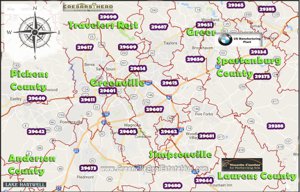
_Guide_to_School_Districts_in_Greenville_County,_SC.jpg) One common misconception among relocating buyers is that every community around Greenville belongs to the same school district. In reality, the Greater Greenville area includes multiple public school districts, each serving different counties and municipalities.
One common misconception among relocating buyers is that every community around Greenville belongs to the same school district. In reality, the Greater Greenville area includes multiple public school districts, each serving different counties and municipalities.
The largest is Greenville County Schools, which serves most communities within Greenville County, including Greenville, Greer (partially), Mauldin, Simpsonville, Taylors, Travelers Rest, Fountain Inn (partially), and several surrounding areas.
Beyond Greenville County, nearby communities may be served by other districts, including those in Spartanburg County, Anderson County, Pickens County, and Laurens County. For example, a home in Easley is generally served by the School District of Pickens County, while homes in Spartanburg County follow the boundaries of the applicable Spartanburg County district.
Because school assignments are based on a property's physical address—not simply its mailing address or the nearest school—it's essential to verify which district serves a home before making an offer.
In addition to traditional public schools, many families also explore charter schools, private schools, magnet academies, and specialized academic programs throughout the Upstate. We'll discuss these options later in this guide so you can better understand the educational choices available across the region.
Greenville County Schools: An Overview
For families considering a move to the Upstate, Greenville County Schools (GCS) is an important place to begin. It is the largest public school district in South Carolina and serves students across much of Greenville County through a network of elementary, middle, and high schools.
Because the district covers a large geographic area, students may have access to different schools depending on where they live. Attendance zones are based on a home's physical address, so two homes located in different parts of Greenville County may be assigned to different schools—even if they share the same city or ZIP code.
Greenville County Schools serves many of the area's most well-known communities, including:
- Greenville
- Greer (portions within Greenville County)
- Mauldin
- Simpsonville
- Taylors
- Travelers Rest
- Fountain Inn (portions within Greenville County)
- Berea
- Five Forks
- Wade Hampton
- Sans Souci
- Slater-Marietta and several surrounding communities
If you're purchasing a home, it's always a good idea to verify the assigned schools using the property's address before submitting an offer.
Grade Levels Within Greenville County Schools
Like many public school systems, Greenville County Schools is organized into three primary levels:
- Elementary Schools generally serve kindergarten through fifth grade.
- Middle Schools typically serve grades six through eight.
- High Schools generally serve grades nine through twelve.
Some schools or programs may have specialized grade configurations, so families should confirm the details for the schools serving their address.
Academic Programs and Learning Opportunities
Greenville County Schools offers a variety of educational opportunities designed to meet different learning styles, interests, and career goals.
Depending on eligibility and availability, students may have access to programs such as:
- Magnet academies
- Fine arts programs
- STEM (Science, Technology, Engineering, and Mathematics) opportunities
- Career and technical education
- Advanced Placement (AP) courses
- Dual enrollment opportunities
- Gifted and talented programs
- International Baccalaureate (IB) programs at select schools
Because academic offerings vary by school and may change over time, families should review the latest information directly through Greenville County Schools when researching educational options.
Transportation Services
Greenville County Schools provides transportation for many eligible students. Bus routes, eligibility requirements, and transportation policies are determined by the district and may vary depending on where a student lives.
If transportation is an important consideration for your family, be sure to verify bus availability, estimated ride times, and any applicable requirements before purchasing a home.
School Calendars and Enrollment
Families relocating to Greenville should also become familiar with the district's academic calendar, enrollment process, and registration requirements.
Enrollment generally requires documentation such as proof of residency, immunization records, birth certificates, and other required forms. Because enrollment procedures may change, it's best to consult the district directly for the most current requirements before your move.
Planning ahead can help make the transition to a new school smoother for both parents and students.
Visit Greenville County School District for more information about the school calendars and enrollment.
Nearby School Districts Serving the Greater Greenville Area
_Guide_to_School_Districts_in_Greenville_County,_SC.jpg) Although Greenville County Schools serves much of the county, not every home in the Greater Greenville area falls within its boundaries. Several neighboring counties have their own public school districts, and it's important for homebuyers to understand where those boundaries begin and end.
Although Greenville County Schools serves much of the county, not every home in the Greater Greenville area falls within its boundaries. Several neighboring counties have their own public school districts, and it's important for homebuyers to understand where those boundaries begin and end.
If you're searching for homes outside Greenville County, you may encounter one of the following districts.
Spartanburg County School Districts
Communities east of Greenville—including portions of Greer, Duncan, Lyman, Wellford, and other nearby areas—may be served by one of Spartanburg County's public school districts.
Unlike Greenville County, Spartanburg County is divided into multiple districts, each serving specific geographic areas. The district assigned to a property depends on its location within the county.
School District of Pickens County
If you're considering communities such as Easley, Liberty, Pickens, or Clemson, the home you're purchasing will generally be served by the School District of Pickens County.
Many buyers appreciate the area's convenient access to both Greenville and the mountains, making Pickens County a popular choice for those seeking a balance between outdoor recreation and city amenities.
Anderson School Districts
Buyers exploring communities such as Anderson, Powdersville, or Belton may be served by one of Anderson County's public school districts.
As with Spartanburg County, Anderson County is divided into multiple districts, so it's important to verify school assignments based on the property's address.
Laurens County School Districts
For buyers interested in communities such as Laurens, Clinton, or portions of Fountain Inn located within Laurens County, public schools are administered through Laurens County's school districts.
These communities offer another option for buyers who want to live within commuting distance of Greenville while enjoying a different pace of life.
Why County Lines Matter
One of the most common surprises for relocating buyers is learning that a city's mailing address doesn't always determine its school district.
For example:
- A home with a Greer mailing address could be located in Greenville County or Spartanburg County.
- A Fountain Inn address may fall within Greenville County or Laurens County
Nearby communities may have similar mailing addresses but belong to entirely different public school districts.
That's why it's important to verify the specific school assignments for any property you're considering rather than assuming they're based on the city name alone.
Understanding how county and district boundaries work can help you avoid surprises and make more informed decisions as you narrow your home search.
How to Find Which School Serves a Home
One of the most important steps in your home-buying journey is confirming which schools are assigned to a property. While online real estate listings may display nearby schools, those listings should not be considered the final source for school assignments.
School attendance zones are based on official district boundaries and can change over time. Before submitting an offer on a home, take the time to verify the assigned schools directly with the applicable school district.
Here are a few steps that can help:
1. Use the School District's School Locator Tool
Many school districts provide online tools that allow you to enter a property's address to determine its assigned elementary, middle, and high schools.
These tools are often the quickest way to verify attendance zones and can help you avoid relying on outdated or inaccurate third-party information.
2. Contact the School District Directly
If you're unsure about a property's school assignment, reach out to the district's enrollment office. District staff can confirm attendance zones, explain enrollment procedures, and answer questions about transportation or available programs.
3. Verify Before Closing
School boundaries may change as communities grow and new schools open. Even if you've confirmed a property's assigned schools during your home search, it's a good idea to verify them again before closing, especially if your purchase timeline spans several months.
4. Ask Questions During Your Home Search
Your real estate professional can help you identify the appropriate resources for verifying school assignments and point you toward official district information. However, because school boundaries and policies can change, the school district should always be the final authority.
Public, Charter, and Private Schools: Understanding Your Options
Families moving to the Greater Greenville area have several educational options to consider. Understanding the differences can help you decide which environment best fits your child's needs and your family's priorities.
Public Schools
Public schools are funded through state and local resources and serve students who live within designated attendance zones. Most families purchasing a home in Greenville County will be assigned to a public school based on the property's address.
Public schools offer a wide range of academic programs, athletics, arts, clubs, and extracurricular activities.
Charter Schools
Charter schools are public schools that operate under a charter agreement and often focus on a particular educational approach or area of study. Admission requirements and enrollment procedures vary by school, and some charter schools may use lotteries when applications exceed available seats.
If you're interested in a charter school, be sure to review its admission process, eligibility requirements, and application deadlines.
Private Schools
The Greater Greenville area is home to a variety of private schools representing different educational philosophies, religious affiliations, and grade levels.
Because private schools establish their own admissions requirements, tuition, and enrollment timelines, families should contact each school directly for the most up-to-date information.
Looking Beyond School Ratings
When researching schools, it's easy to focus primarily on ratings or rankings. While these resources may be part of your research, they shouldn't be the only factor you consider.
Every family has different priorities, and what's important to one household may not be the deciding factor for another.
As you evaluate your options, consider questions such as:
- Does the school offer academic programs that align with your child's interests?
- What extracurricular activities, athletics, arts, or clubs are available?
- How long will your child's daily commute be?
- Are before- and after-school programs available if needed?
- What transportation options are offered?
- Does the school's calendar work well with your family's schedule?
- What support services are available for students?
Taking a broader approach can help you choose a community that supports your family's overall lifestyle rather than focusing on a single metric.
How School Districts Fit Into Your Home Search
_Guide_to_School_Districts_in_Greenville_County,_SC.jpg) Schools are one piece of the home-buying process, but they should be considered alongside many other lifestyle factors.
Schools are one piece of the home-buying process, but they should be considered alongside many other lifestyle factors.
When evaluating neighborhoods, think about how the location will support your daily routine. Questions worth asking include:
- How far is the commute to work?
- Are grocery stores, healthcare providers, and everyday services nearby?
- Are there parks, trails, libraries, and recreational facilities close to home?
- Does the neighborhood offer the type of environment you're looking for?
- Will the location continue to meet your family's needs over the coming years?
Choosing a home is about finding a place that supports your lifestyle as well as your housing goals.
If you're still exploring different communities, our article What to Look for in a Neighborhood When Buying a Home offers additional guidance on evaluating neighborhoods beyond the home itself.
Questions Every Homebuyer Should Ask Before Purchasing
Whether you're moving across town or relocating from another state, asking the right questions early can help you make informed decisions.
Consider asking:
- Which public schools serve this address?
- Are there charter or private schools nearby that fit our needs?
- How are school assignments verified?
- What documents will be required for enrollment?
- Is transportation available for this address?
- How long is the typical commute to school?
- What extracurricular programs are available?
- Are there future development plans that could affect attendance boundaries?
Having answers to these questions before closing can help reduce surprises after you move and make the transition easier for your family.
Why This Research Matters for Relocating Families
If you're relocating to the Greater Greenville area, researching schools before purchasing a home can provide greater confidence throughout the buying process.
By understanding attendance zones, exploring the different educational options available, and verifying school assignments through official sources, you'll be better prepared to choose a home that aligns with your family's goals.
Combined with researching neighborhoods, commute times, local amenities, and community lifestyle, school district information becomes another valuable piece of making an informed home-buying decision.
Frequently Asked Questions About School Districts in Greenville County, SC
Which school district serves Greenville, SC?
Most homes within Greenville County are served by Greenville County Schools, the largest public school district in South Carolina. However, some communities in the Greater Greenville area are located in neighboring counties and may be served by districts in Spartanburg, Anderson, Pickens, or Laurens counties. Always verify the school district based on the property's physical address.
How do I find which school serves a specific home?
The most reliable way is to use the official school district's school locator or attendance zone tool. You can also contact the district's enrollment office directly to verify school assignments before purchasing a home.
Can school attendance boundaries change?
Yes. School attendance zones may change as communities grow, enrollment shifts, or new schools open. Before closing on a home, confirm the current attendance boundaries with the applicable school district.
Are there charter schools in the Greater Greenville area?
Yes. Families in the Greater Greenville area have access to charter schools in addition to traditional public schools. Each charter school has its own enrollment process, eligibility requirements, and application deadlines, so it's important to research individual schools directly.
Are private schools available in Greenville?
Yes. The Greater Greenville area offers a variety of private schools with different educational philosophies, religious affiliations, and grade levels. Families should contact individual schools for information about admissions, tuition, and enrollment.
What documents are typically required to enroll a child in public school?
Requirements may vary by district, but families are commonly asked to provide:
- Proof of residency
- Birth certificate
- Immunization records
- Parent or guardian identification
- Previous school records, when applicable
Always verify current enrollment requirements with the school district before your move.
Should I choose a home based only on school ratings?
School ratings can be one part of your research, but they shouldn't be the only factor. It's also important to consider commute times, extracurricular opportunities, transportation, neighborhood amenities, future plans for your household, and the overall lifestyle a community offers.
Final Thoughts
Researching school districts is an important part of preparing to buy a home in the Greater Greenville area. Whether you're relocating from another state or moving within Upstate South Carolina, understanding how school districts are organized can help you make more informed decisions throughout your home search.
Take time to verify attendance zones, explore the educational options available, and consider how each community aligns with your family's priorities. While schools are an important consideration, they're just one part of finding a neighborhood that supports your lifestyle, commute, recreational interests, and long-term goals.
If you're planning a move, don't stop your research here. We also recommend exploring these helpful resources:
- Moving to Greenville, SC: Complete Relocation Guide
- How to Buy a Home When Relocating to Greenville, SC
- Things to Do in Greenville, SC After You Move
- What to Look for in a Neighborhood When Buying a Home
- Home Buying Process Explained: What Every Buyer Should Know
- Pre-Approval vs. Pre-Qualification: Why Homebuyers Shouldn't Skip This Step
Together, these guides will give you a well-rounded understanding of what it's like to buy a home and build a life in the Greater Greenville area.
Ready to Start Your Home Search?
If you're considering a move to Greenville or anywhere in the Greater Greenville Upstate South Carolina, we're here to help. We combine local market knowledge with experienced negotiation strategies to help buyers make confident, informed decisions throughout the home-buying process.
Whether you're relocating from across the country or moving from another part of South Carolina, we'd be happy to answer your questions, help you understand the local market, and guide you every step of the way.
Call us at 864-438-5050 or schedule a call to begin your home-buying journey.

Receive Cash Offer on Your House Today!
Did you know that we have a cash offer platform? It's your gateway to make your home selling process convenient, providing you with opportunities. Don't miss out on the potential it offers – explore our cash offer platform today! Click here to request a cash offer for your home.